Where ‘I’ end and ‘you’ begin
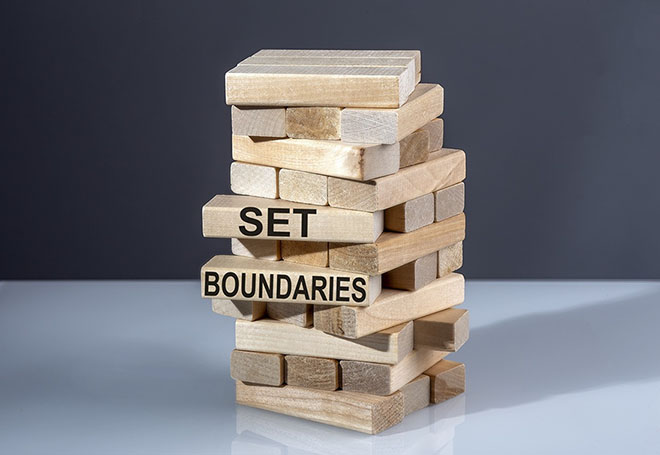
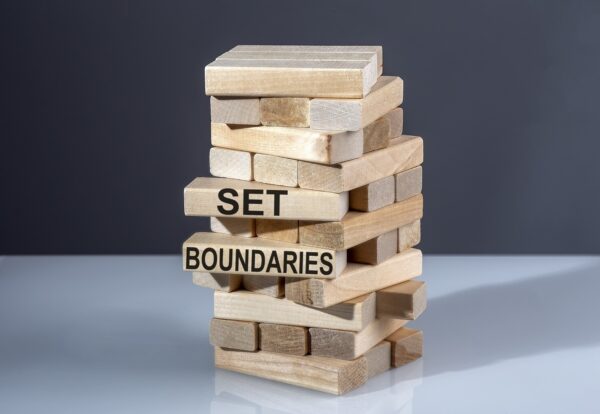
Personal boundaries are the limits and rules we set for ourselves within relationships. A person with healthy boundaries can say “no” to others when they want to, but they are also comfortable opening themselves up to intimacy and close relationships.
Boundaries improve our relationships and self-esteem
An overly sacrificing approach to relationships can create imbalance or exploitation. Boundaries are necessary for any relationship to be healthy and sustainable. They protect our relationships from becoming unsafe while also preserving space and opportunity for meaningful connection and emotional closeness.
Having boundaries enables you to make your needs and values a priority, whether that’s in self-care, career aspirations, or within relationships.
Boundaries & Self-Care
Boundaries enable each of us to protect and manage our unique set of individual needs, strengths, values, and resources in our daily lives, and this should be reflected in the way we set and use them in our activities and relationships. We all have emotional and social needs and resources that are unique to us, and these individual differences will inevitably show up in our different behaviours, preferences, and capacities.
Boundaries that are insufficient, too loose, or too rigid can impact our relationships with others when our needs aren’t met and resentment builds. Our self-esteem and sense of identity can also be impacted by unclear boundaries because we learn to feel that we lack the capacity to consistently advocate for ourselves.
You don’t need to have the same boundaries or comfort level as everyone else.
Boundaries that are specific and unique to you and your individual needs can help you maintain enough energy to care for yourself.
Understand that just because you may be happy to lend a hand to your best friend on moving day doesn’t mean you also have to do the heavy emotional lifting when someone texts about their latest drama.
Flexibility & Vulnerability with Boundaries
Healthy boundaries aren’t permanent. They are useful in context. A good self-care practice should involve reflecting on the way our experiences impact us and using this information to set, define, adjust, and enforce our boundaries. It can be helpful to keep reassessing what makes sense for you in the present moment.
There may be times when loosening our boundaries means we can experience deeper connection and fulfillment in our relationships with others, and other times when doing so causes us pain. This is because loosening our boundaries increases our vulnerability. Vulnerability, however, is necessary for deepening our relationships and making them more meaningful and fulfilling. Present-moment flexibility with our boundaries enables us to both practice and learn from safe vulnerability.
When we display our vulnerability to someone, we let them know that flaws, mistakes, and pain are safe experiences with us – and this can help build connection and trust. Showing vulnerability with others also increases the meaningful bonding that comes with shared vulnerability. Shared vulnerability brings people closer together over time. Boundaries with vulnerability are different than over-sharing, however.
In some cases, setting and maintaining healthy boundaries within relationships can be challenging, and seeking support from a qualified counsellor can be immensely beneficial. Whether you’re navigating boundaries within your romantic relationship or struggling with individual boundaries, counselling provides a safe space to explore these issues and develop effective strategies for fostering healthy connections. Couples counselling can help partners communicate effectively and negotiate boundaries that honour each other’s needs and values, while individual counselling offers personalized support in identifying and asserting boundaries in various aspects of life. If you find yourself facing difficulties in maintaining boundaries or desire additional guidance, don’t hesitate to reach out to a professional counsellor for assistance.
Oversharing is one-sided and can be a manipulation tactic that uses drama to manipulate and hold others emotionally hostage, or to force the relationship in one direction. You do not owe someone vulnerability simply because they seem to have no problem sharing things with you.
Written by Katie Sharpe