



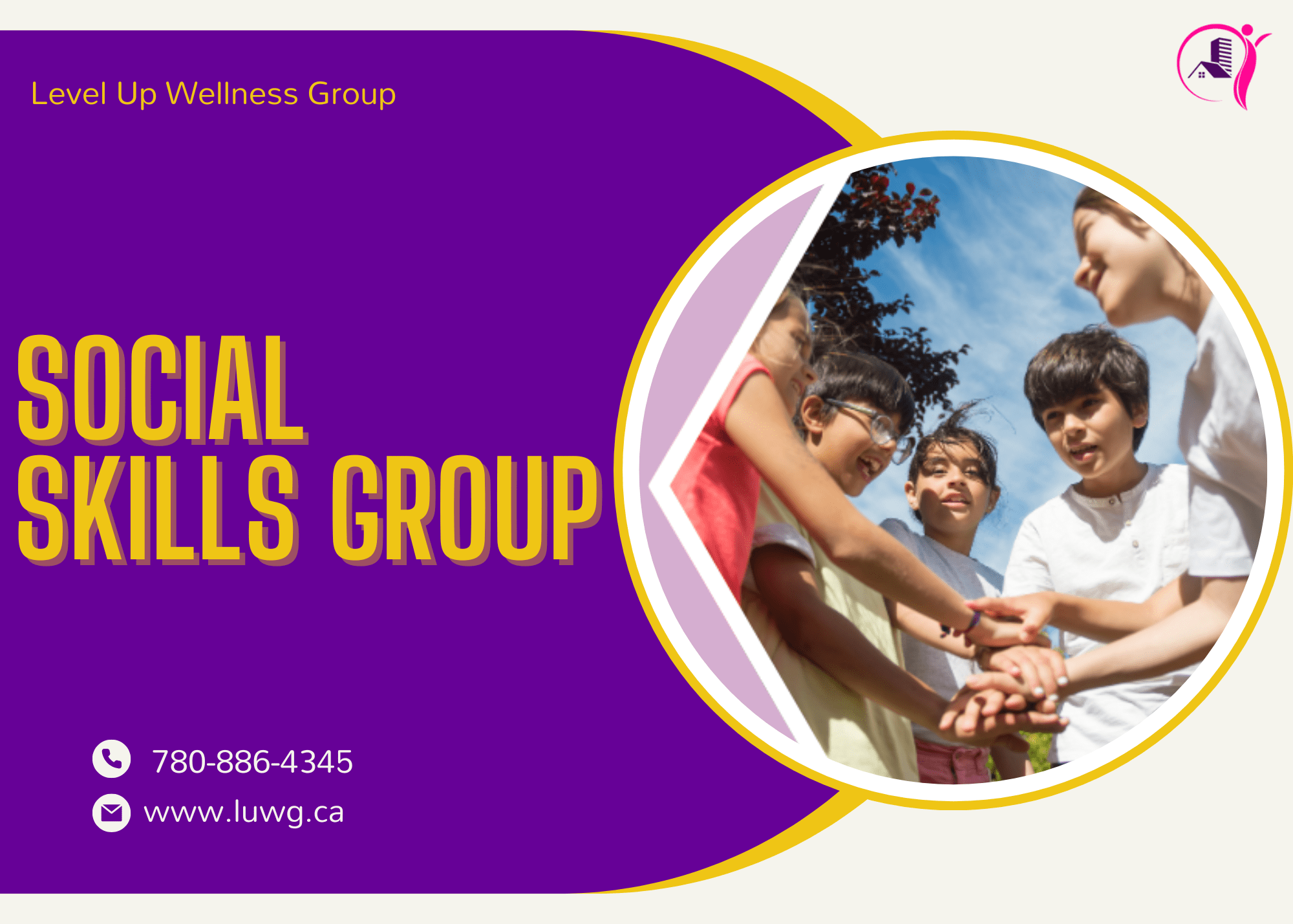
Social Skills Group workshop for kids, Children social group therapy

Social Skills Group

Share This Article!

Support your child’s social and emotional development in a fun, engaging, and confidence-building environment.

Date: Tuesdays starting May 6, 2025

Time: 5:00 – 6:00 PM

Who: Children in Grades 4–6

Where: Beaumont Rec Centre

Cost: $110 per session

A $50 non-refundable deposit is required at the time of registration.

Weekly Themes

  • Week 1: Self- and Other-Awareness

  • Week 2: Self Regulation and Emotions

  • Week 3: Initiating and Maintaining Conversation

  • Week 4: Social and Non-Verbal Cues

  • Week 5: Conflict Resolution and Problem Solving

  • Week 6: Being a Good Friend

Social Skills Group for Kids (Grades 4–6)

Is your child shy, struggling to make friends, or having difficulty navigating social situations?

You’re not alone—and there’s support. Our Social Skills Group, led by Dr. Mercy, is designed to help children in grades 4–6 learn and practice vital interpersonal skills that set the foundation for healthy relationships and self-esteem.

Children group therapy, kids group therapy, kids group workshop, friendship

What Your Child Will Learn

Over six weeks, participants will develop essential social and emotional skills through interactive group activities, pro-social games, and guided discussions. This group is a safe space for children to connect, grow, and build friendships while learning how to:

  • Develop self- and other-awareness

  • Regulate their emotions in social settings

  • Start and maintain conversations

  • Understand and use social and non-verbal cues

  • Resolve conflicts and problem-solve effectively

  • Be a good friend and community member

Meet Your Facilitator

DR. MERCY YEBOAH-AMPADU ,Child Therapist Lead & Registered Social Worker,

Dr. Mercy Yeboah-Ampadu

Child Therapy Lead

Registered Social Worker

She/ her

Why Social Skills Matter

Strong social skills are essential for success—in school, at home, and in life. Children who feel confident in social interactions are more likely to have positive peer relationships, perform well academically, and develop higher self-esteem.

Reserve Your Child’s Spot Today

Spots are limited and fill quickly! Give your child the opportunity to grow socially and emotionally in a supportive and empowering group setting.

Share This Article!

Keep Reading!

Autism Spectrum Disorder ASD

How to Find the Best Autism Spectrum Disorder (ASD) Resources in Canada

Autism spectrum disorder ASD is often defined as a neurodevelopmental condition characterized by differences in social communication and interaction, alongside restricted and repetitive patterns of behaviour, interests, and activities. Rather than viewing autism as a disease requiring a cure, many Canadian clinicians, researchers, and autistic self-advocates understand it as a form of natural human development variation. This neurodiversity perspective, which has gained significant traction in Canadian healthcare and education settings, emphasizes that autistic people experience the world differently—not deficiently.
Read More »
ADD and ADHD

ADD and ADHD in Alberta: A Practical Guide for Parents and Adults

Whether you’re a parent in Calgary watching your child struggle to focus through another homework session, a young professional in Edmonton wondering why simple tasks feel impossibly hard, or a family in rural Alberta searching for answers, you’re not alone. ADD and ADHD affects thousands of Albertans, and understanding this condition is the first step toward meaningful support.

Read More »
Erectile Dysfunction ED

Struggling with Erectile Dysfunction (ED)? Why Alberta Men Are Silently Suffering with Intimacy Issues

For many Alberta men, erectile dysfunction (ED) feels isolating. Maybe you’ve hesitated to bring it up with your GP in Red Deer because you don’t want it on your chart. Perhaps you’ve avoided walk-in clinics in Edmonton, worried someone you know might see you. Or you’ve simply stopped initiating intimacy with your sexual partner because repeated failures feel worse than not trying at all. These reactions are understandable—and more common than you might think.

Read More »
Scroll to Top