Defining Obsessive-Compulsive Disorder (OCD)
Obsessive-Compulsive Disorder (OCD) is a mental health condition characterized by intrusive thoughts (obsessions) and repetitive behaviors (compulsions). These symptoms are more than just habits or worries; they are intense, often irrational fears and actions that significantly disrupt daily life. OCD not only affects the individuals who have it but also has a profound impact on their families and partners.
The Impact of OCD on Individuals, Families, and Partners
Individuals with OCD experience a range of difficulties, from intense anxiety to disruptions in their daily activities. Their obsessions and compulsions can consume hours each day, making it challenging to maintain normal routines or engage in social activities.
Families and partners also face their own set of challenges. They may find themselves adjusting their lifestyles to accommodate the needs of their loved one with OCD. This could mean changing how they organize the home, altering social plans, or even participating in the rituals associated with the individual’s compulsions. The emotional toll on families and partners can be significant, often leading to feelings of stress, frustration, or helplessness.
Introducing Family and Partner Accommodations in OCD
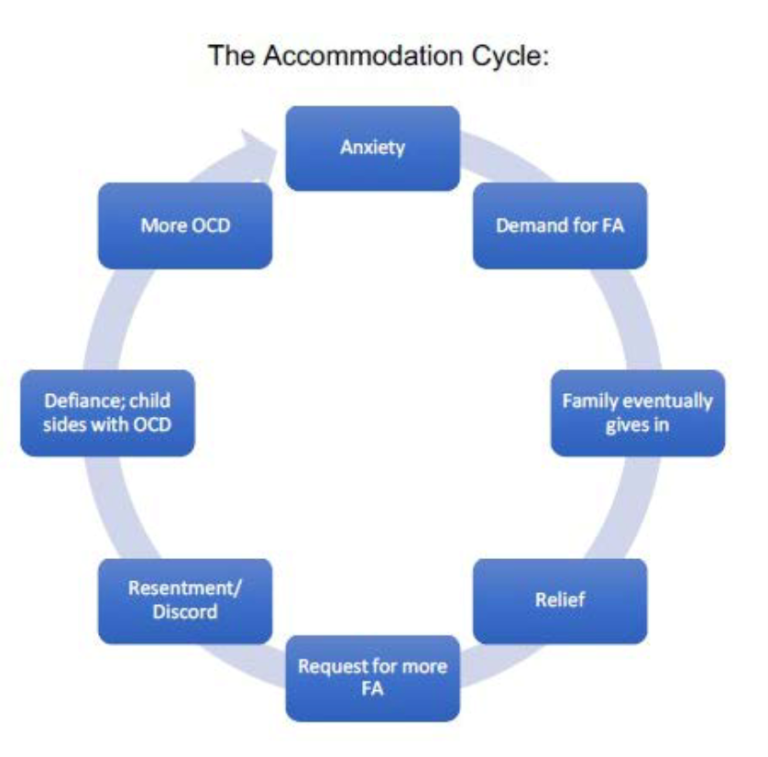
Family and partner accommodations in OCD refer to the modifications or support behaviors that are aimed at reducing the stress of the affected individual. These accommodations, while meant to help, can sometimes reinforce the OCD behaviors. Examples include:
- Adjusting household routines to avoid triggering the person’s obsessions.
- Offering repeated reassurances or participating in rituals.
- Avoiding certain topics of conversation or social situations that might provoke anxiety.
While these actions stem from a place of care and concern, they can inadvertently contribute to the persistence of OCD symptoms.
The Importance of Understanding Family and Partner Accommodations
Recognizing the role of family and partner accommodations in OCD is essential for effective management of the condition. It’s important for families and partners to understand how certain behaviors, though well-meaning, might impact the course of OCD. This understanding is crucial for:
- Fostering a supportive environment that encourages healthy coping mechanisms.
- Reducing stress and tension within the family or partnership.
- Enhancing the effectiveness of treatment for the individual with OCD.
Conclusion
OCD is a condition that extends its effects beyond the individual to touch the lives of families and partners. Understanding and managing family and partner accommodations is a vital aspect of supporting someone with OCD. This process involves a careful balance between providing support and avoiding reinforcement of the condition. Through awareness, education, and often professional guidance, families and partners can play a pivotal role in the journey towards managing OCD effectively, fostering an environment of understanding and support.
This blog post is designed to provide a brief understanding of OCD and the crucial role that family members and partners play in managing accommodations. It aims to offer insights and guidance for those seeking to support their loved ones with empathy and effectiveness, while navigating the complex dynamics of OCD.
Provided by Dr. Melody